Now Reading: From Financial Exclusion to Asset Ownership: Women-Led Predictive Finance in Pakistan
-
01
From Financial Exclusion to Asset Ownership: Women-Led Predictive Finance in Pakistan
From Financial Exclusion to Asset Ownership: Women-Led Predictive Finance in Pakistan

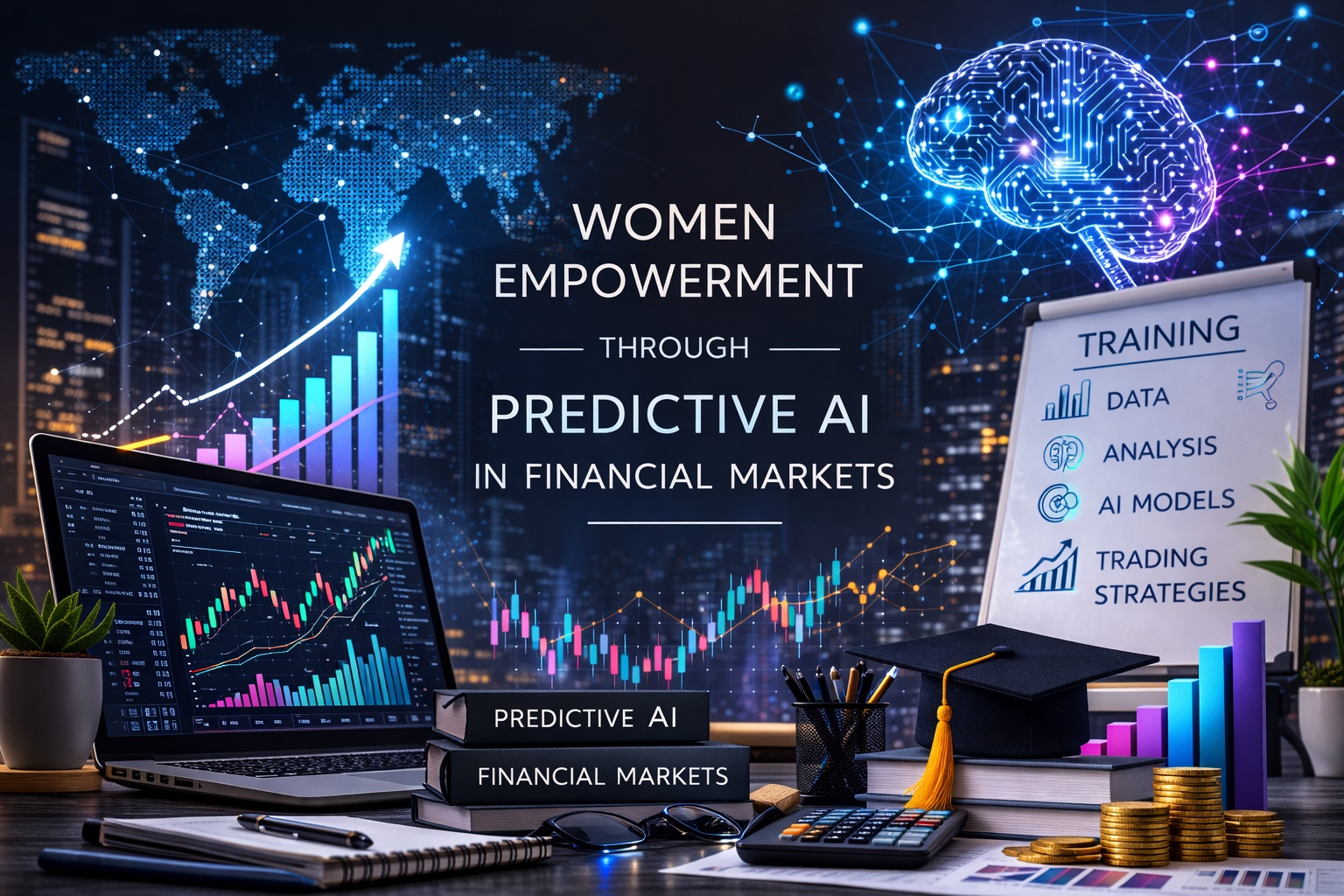
Pakistan stands at a critical intersection between technological transformation and inclusive economic development. As financial systems worldwide undergo rapid digitization driven by artificial intelligence, emerging economies face an important policy choice: whether innovation will deepen existing inequalities or expand access to economic opportunity. The evolution of predictive artificial intelligence within capital markets represents not merely a technological shift, but a structural opportunity to redesign financial participation itself.
Volume I of this policy series established the regulatory and institutional foundations required for responsible adoption of Predictive AI within Pakistan’s stock market ecosystem. Building upon that framework, this volume advances the discussion toward inclusion placing women at the center of financial modernization. Despite their substantial contribution to household economies and informal markets, women in Pakistan remain largely excluded from asset ownership and investment participation. This exclusion limits both individual economic mobility and national capital formation.
This policy brief argues that Predictive AI can fundamentally alter this trajectory. By simplifying financial decision-making, automating risk assessment, and democratizing access to market intelligence, AI-enabled finance has the potential to lower longstanding barriers that have historically restricted women’s engagement with formal investment systems. When combined with targeted institutional design, localized training infrastructure, and gender-responsive governance, predictive finance can transition women from passive savers to active investors and asset holders.
The framework presented in this report therefore moves beyond financial inclusion in its traditional sense. It proposes a scalable national model through which technology, public policy, and community institutions converge to enable sustainable wealth creation among women particularly those in rural and underserved regions. The proposed Women-Led Predictive Finance ecosystem integrates artificial intelligence tools, financial literacy programs, cooperative ownership structures, and phased implementation mechanisms designed to ensure long-term sustainability.
Importantly, this work positions inclusive finance not as a social welfare intervention but as an economic growth strategy. Expanding women’s participation in capital markets strengthens domestic savings mobilization, deepens financial market liquidity, enhances household resilience, and supports broader development outcomes aligned with global Sustainable Development Goals. Pakistan thus possesses an opportunity to emerge as a regional leader in gender-responsive AI adoption within financial systems.
This policy brief is intended to serve policymakers, regulators, development institutions, financial market stakeholders, and technology partners seeking actionable pathways toward inclusive digital finance. It reflects The Meridian Council’s broader mission to advance evidence-based policy innovation that aligns technological progress with social equity and sustainable economic transformation.